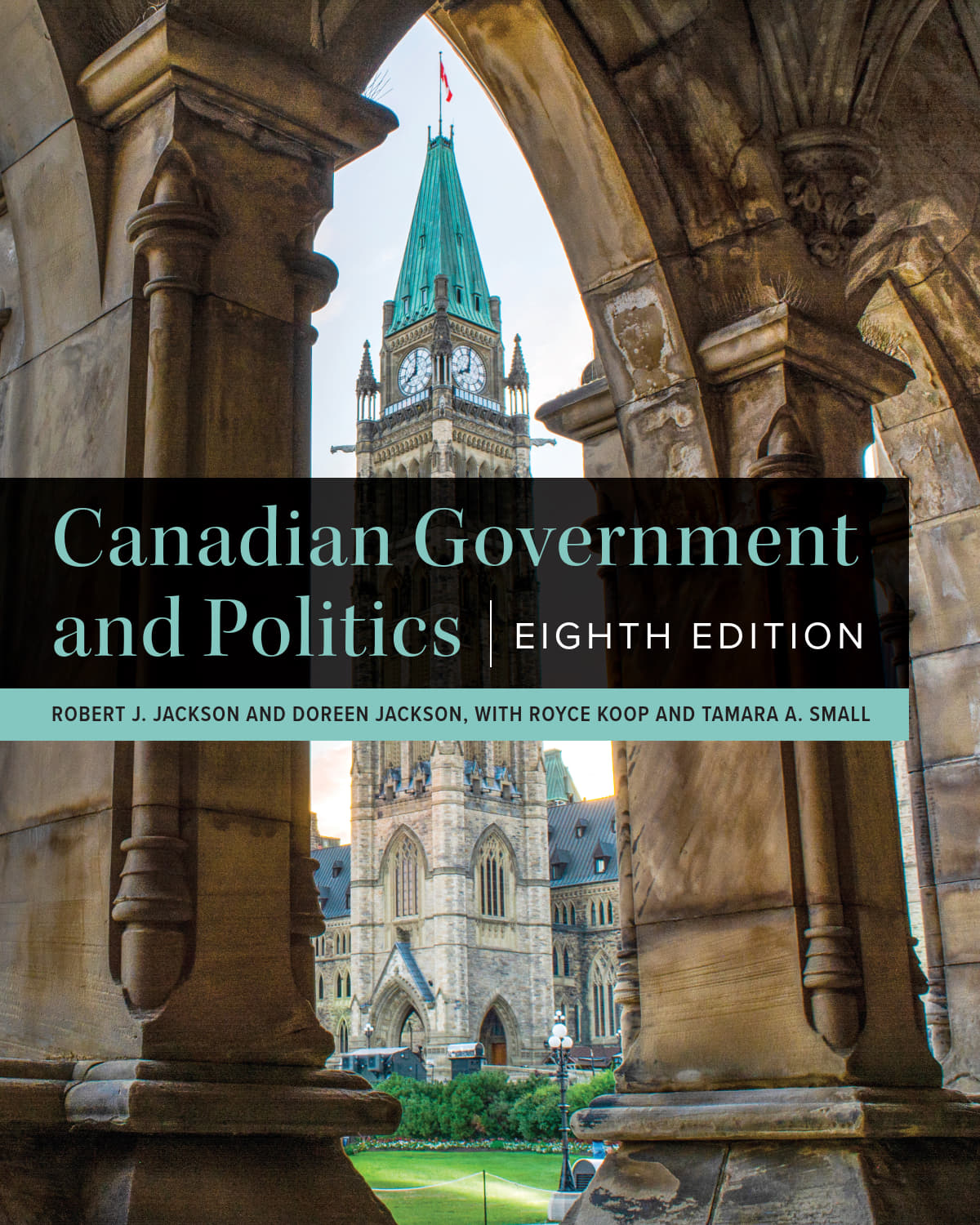
Canadian Government and Politics delivers an up-to-date and concise introduction to Canada’s political institutions, processes, and issues. The text integrates theory, history, Census data, and current affairs to give students an orderly picture of the wide-ranging landscape of Canadian government and politics. The authors aim for fair-minded, impartial discussions, meant to foster an optimistic perspective on Canadian politics that encourages critical thinking and active citizenship.
This eighth edition adds exciting new material on Canada’s cultural landscape, institutions, and policies. This includes significantly expanded coverage of Western alienation, a full chapter on Indigenous Peoples in Canada, and new discussions of demographic representation, housing policy, racial justice, and third-party intervention.
Comments
“This textbook offers undergraduate students an ideal introduction to Canadian politics, providing excellent coverage on institutional arrangements, processes, and policy issues. Subject analysis is comprehensive and relevant whilst remaining both focused and accessible. The text is well organized with clear objectives, definitions, and suggested discussion questions provided throughout. The eighth edition is sure to spark engaged seminar conversations, having been updated to expand coverage of important contemporary topics including Western alienation, indigenous child welfare, housing policy, trade relations, and military spending.” — Jan Hancock, Cape Breton University
“A classic text gets a timely and comprehensive update that combines up-to-date analysis of recent events, such as the 2025 election and the re-emergence of Western discontent, with thoughtful historical context and analysis that works to deepen the students’ understanding of both. Used effectively, this new edition can help students navigate a political world that is increasingly fractured and fractious.” — Tom McIntosh, University of Regina
“As Canada’s place in the world shifts and heaves in uncertain times, students must have a strong foundation in the people, places, and institutions that shaped our country’s political development and that explain current dynamics of conflict and change. Accessible, comprehensive, and up to date, this textbook is required reading for students who are curious about Canada and all of its political complexities.” — Anna Esselment, University of Waterloo
“Comprehensive? Yes. Accessible? Absolutely. Comprehendible? Completely. Canadian Government and Politics is readable, engaging, and inviting. Students will appreciate and learn from the depth and breadth of coverage and the insights that are offered page after page. Ideas, institutions and actors are well delineated. Theoretical concepts are brought to life. Real life examples of how Canadian government and politics unfold are presented. There could scarcely be a time when it is more necessary for students to understand the complexities of governing Canada. This text helps immeasurably in achieving that goal.” — Greg Inwood, Toronto Metropolitan University
“Equal parts textbook and extended conversation about our political system, Canadian Government and Politics moves seamlessly between the big concepts and what we witness daily, offering a clear, logical picture of Canada’s political operations, from its origins to today. Real-world examples, end-of-chapter discussion questions, marginal key terms, and recommended readings round out a textbook that will bring together students and instructors to jointly explore Canada’s political development.” — Yale D. Belanger, University of Lethbridge