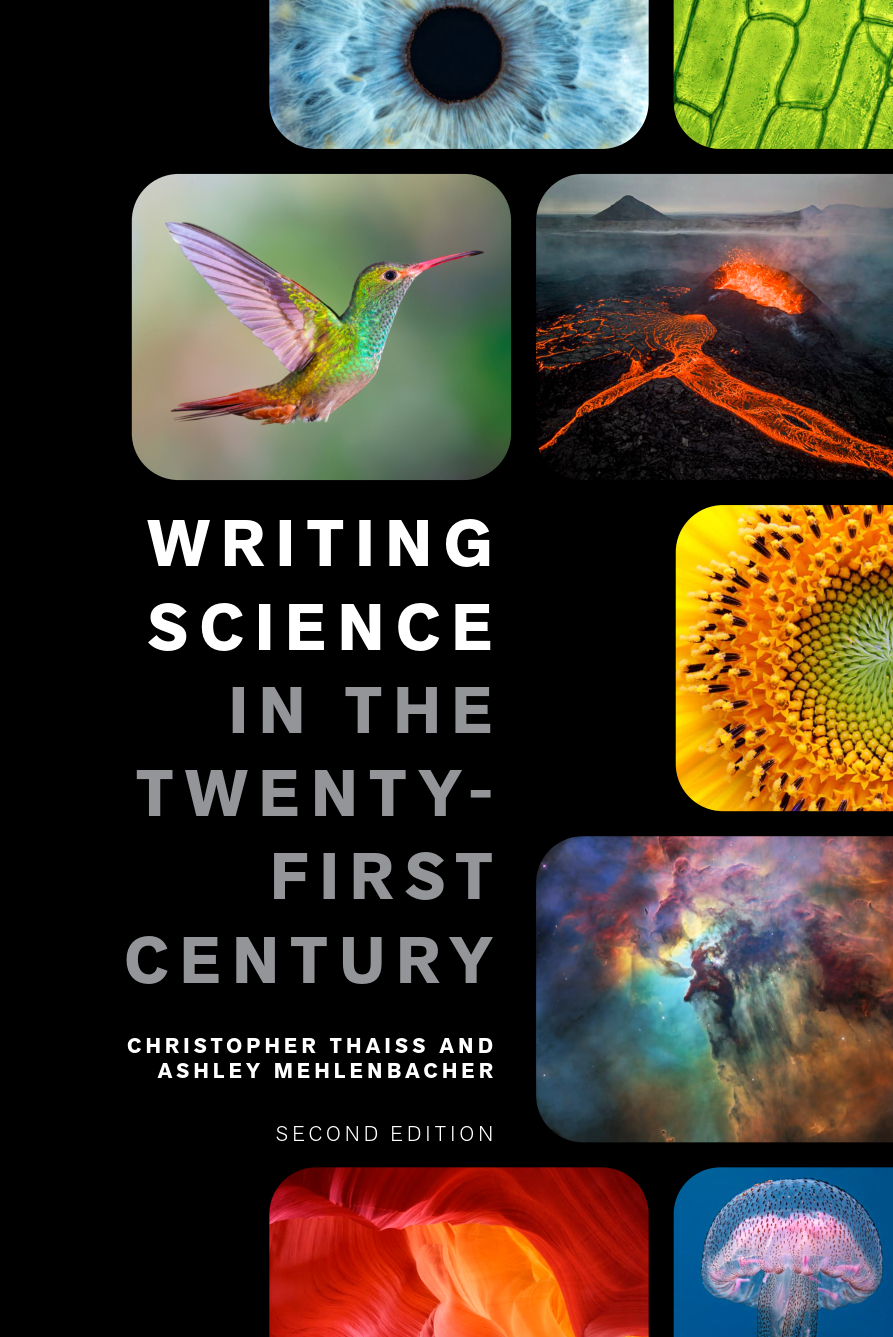
Writing Science in the Twenty-First Century – Second Edition
  • Publication Date: October 3, 2025
  • ISBN: 9781554816811 / 1554816815
  • 360 pages; 6" x 9"

Price for your region

Broadview eBooks are available on a variety of platforms. To learn more, please visit our eBook information page.

Note on pricing.

Request Exam Copy

Examination copy policy

Availability: Worldwide

Writing Science in the Twenty-First Century – Second Edition

  • Publication Date: October 3, 2025
  • ISBN: 9781554816811 / 1554816815
  • 360 pages; 6" x 9"

Good science deserves good sentences, not just correct ones.

Concise and current, Writing Science in the Twenty-First Century provides practical strategies for a wide range of scientific writing tasks. The authors use a systematic rhetorical approach and plentiful examples from multiple disciplines, preparing students in all STEM fields to write and speak with confidence, accuracy, clarity, and persuasive impact.

This extensively revised second edition features integrated coverage of AI throughout, introducing tools and strategies for using it both ethically and effectively. New material addresses the growing challenge of communicating science in public contexts, and exercises—already a strength in the first edition—have been expanded, offering writers more chances to apply key concepts to their own writing.

Comments

“The second edition of Writing Science in the Twenty-First Century builds upon the proven strengths of the original while masterfully addressing today’s rhetorical challenges facing STEM communicators. The revision thoughtfully tackles contemporary realities: generative AI’s impact on scientific writing, the expanded definition of writing to include multimodal communication, and the critical need for scientists to engage broader publics. Having used this text extensively, I can attest that students consistently develop more sophisticated awareness of audience needs and communication strategies. This collaboration has produced an indispensable resource for anyone serious about effective STEM communication.” — Chris Muniz, University of Southern California

“I have used Writing Science in the Twenty-First Century as a foundational text in my STEM writing courses for several years. It stands out among other STEM writing books because it eschews a focus on mere mechanics, instead centering rhetoric as the foundation of good writing…. The second edition maintains the excellent quality of the first, with the same skillful attention to rhetoric, while incorporating meaningful updates, particularly in the chapter on online communication.” — April Mohlmann, University of West Florida

Writing Science in the Twenty-First Century is a timely and invaluable resource for students and instructors alike. The new edition’s updated examples make complex concepts relatable, while its dedicated, thoughtful discussion on the purposeful use of AI—both the benefits and potential pitfalls—is essential for navigating today’s academic landscape. The second edition is a necessary guide….” — Carrie Wells, University of North Carolina, Charlotte
Introduction: Writing Science for New Readers, with New Technologies, in New Genres

  • This Book Is for You, if …
  • A Focus on Science, but Relevant to All STEM
  • Chapter by Chapter Outline
  • Writing Rhetorically: Central to Effective STEM Communication
  • The Dangers of Rhetoric
  • Why Scientists Need to Learn Rhetoric
  • Writing and Speaking with Respect for Diverse Readers
  • Effective Tools for STEM Rhetoricians

1. Writing to Reach Readers

  • To Write STEM Well, Learn to Read Rhetorically
  • Six Categories of Rhetorical Analysis and Planning: A Systematic Method

2. Building Experience and Confidence in Writing Science

  • From Fear to Confidence
  • The Many Modes of Science Writing
  • Writing as a Necessary Tool for All in Science
  • Overcoming Obstacles for Science Writers in College
  • When Knowledge and Practice Seem Unconnected: What to Do?
  • Building Confidence as a Writer in English (or in Any Language)
  • Resources for Students to Build Writing Proficiency
  • AI Pros and Cons: Can It Be a Confidence Builder?

3. “Writing” Redefined Multimodally

  • Do We Call It Writing—or Something Else? Multimodal Design, Perhaps?
  • Words
  • Numbers and Mathematical Symbols
  • Photographs
  • Multicolor Charts, Tables, and Graphs
  • Links to Other Sources
  • Drawings and Diagrams
  • Video and Audio
  • STEM Communication Online: “Web 2.0” Access and Tools

4. Writing Science Ethically

  • Covering Up Incomplete or Poorly Done Research, or Conflicts of Interest
  • Plagiarism
  • Ethical Issues and Artificial Intelligence
  • Disinformation and Misinformation
  • What Is Common Knowledge?
  • Claims and Overclaims—The Dangers of Hype
  • Dangerous Counterclaims
  • Striving for Accuracy in Language: Maintaining Ethos

5. Writing the Research Article, Part I: Abstract, Introduction, and Methods and Materials

  • Thinking Rhetorically about the Peer-Reviewed Research Article
  • Giving Momentum to Your Research “Story”
  • Writing the Abstract
  • Writing the Introduction of the Full Article
  • Writing the Methods and Materials Section of the Full Article

6. Writing The Research Article, Part II: Results and Discussion

  • Results and Discussion in the Interconnected, Multimedia World
  • Distinguishing between the Results and Discussion Sections
  • Writing Results
  • Writing the Discussion

7. Writing the Research Review

  • Goals of the Research Review and Comparison with the IMRD Article
  • Rhetorical Considerations in Writing the Research Review

8. Stem Journalism—Writing, Reading, and Connecting with Broader Audiences

  • Thinking of Yourself as a STEM Journalist
  • Who Are Your Readers and Why Do They Care?
  • Writing Your STEM Popular Article—Tips on Voice (Ethos) and Organization
  • Tips on Style, Vocabulary, and Ethical Considerations

9. Science Online—New Readers, New Voices, New Tools

  • Science Communication Online
  • STEM Blogs—What Are They and Are They Science?
  • A World of Blogs—Finding the Blog(s) for You
  • Studying the Major Types of Blogs
  • Getting into Blogging for Yourself
  • Establishing Your Ethos
  • Building Your Design

10. Creating Posters and Infographics

  • Posters and Infographics—Using the Two-Dimensional Display Space
  • Thinking Rhetorically about Posters
  • Posters—Up-Close and Personal (or Not)
  • Making Your Poster—Steps in the Process
  • Infographics—Thinking Print
  • Infographics—Thinking Online
  • Making Your Infographic—Steps in the Process

11. Creating Oral-Visual Presentations

  • Presentations as Unmatched Opportunities
  • “Presence” and “Being Present” in a Presentation
  • Making Your Audience Your Ally
  • A Few Dos and Don’ts
  • Planning Your Talk Rhetorically
  • The Visual in Oral-Visual: Striving for Balance
  • Achieving Success through Preparation

12. Writing Science with Style and Styles

  • No Single Style for You
  • But Where Do All These Styles Agree?
  • Keep Sentences Concise with Clear Transitions
  • Guide Your Reader with Signposts
  • Use Paragraphs to Emphasize—Not Hide—Your Ideas
  • Use Numbers to Convince, Not Drown, Your Readers
  • Choose Words to Communicate, Not to Exclude or Intimidate
  • Revise and Edit to Write with Style

13. Editing Sentences

  • Why We Must Edit
  • Cut Unneeded Words
  • To “We” or Not to “We”
  • Action vs. Passivity—Tuning Your Voice
  • Punctuate to Accentuate

Christopher Thaiss is Professor Emeritus of Writing Studies and Rhetoric in the University Writing Program at the University of California, Davis.

Ashley Rose Mehlenbacher is a Professor in English Language and Literature and Canada Research Chair in Science, Health, and Technology Communication at the University of Waterloo.

Key Features:

  • • Recognizes and helps develop confidence as an essential skill for all science writers
  • • Integrated coverage of GenAI as it pertains specifically to science writing
  • • Encouraging and straightforward tone—never patronizing or oversimplified
  • • Rhetorical approach helps readers analyze all manner of texts, including their own
  • • Includes numerous real examples from both popular and academic science writing
  • • Provides hands-on practice with analysis, revision, peer review, and editing

New in the Second Edition:

  • • Thorough, integrated coverage of AI
  • • Added focus on the growing challenges of communicating science in public contexts
  • • Fully updated and revised, with more exercises throughout

Download a Sample: Introduction