
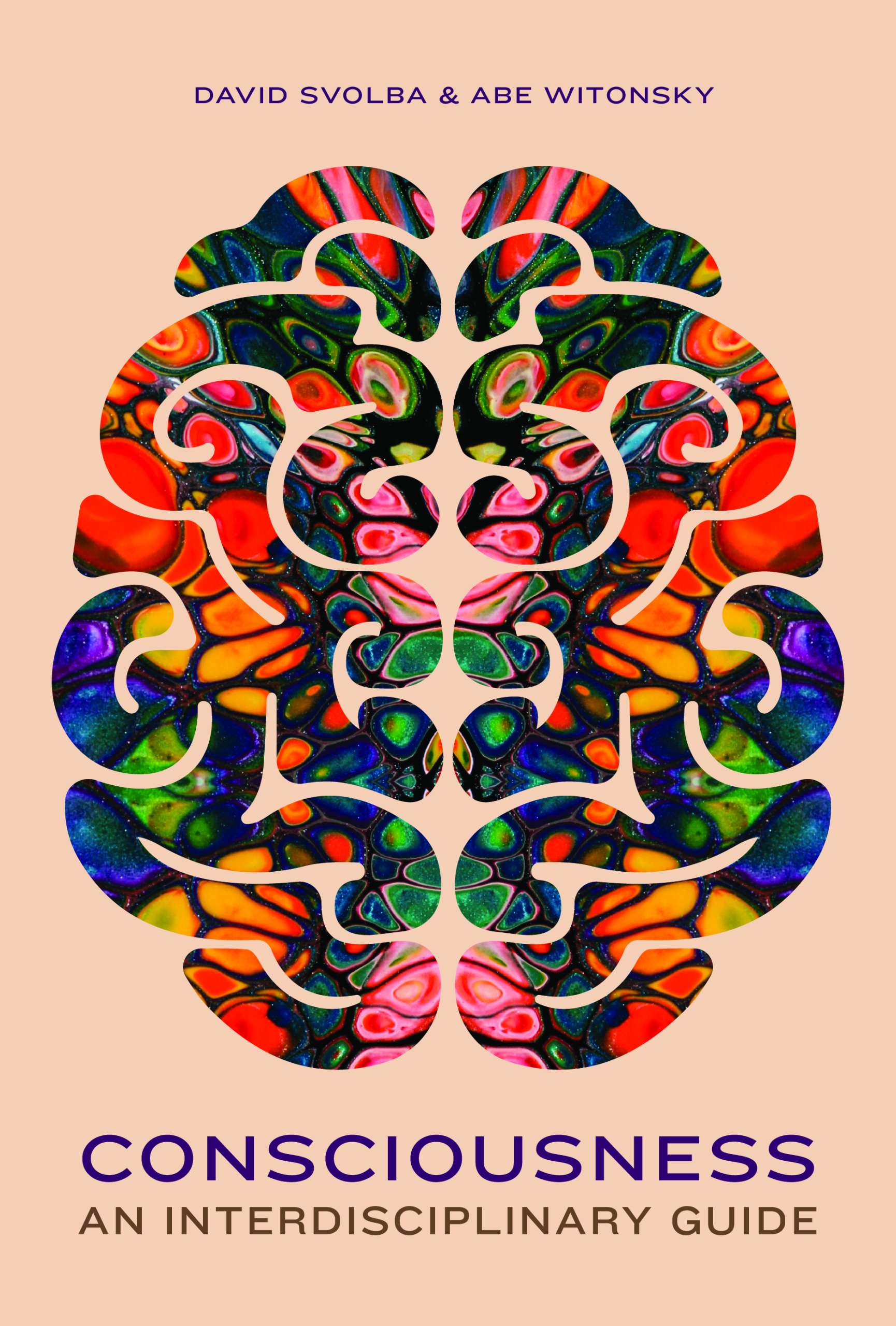
What is consciousness? What is the right way to study it? How can we determine when someone or something is conscious? Drawing on historical and contemporary work across many disciplines, including philosophy, neuroscience, cognitive science, and psychology, David Svolba and Abe Witonsky tackle these questions and many more in this exciting and expansive guidebook. Written for those who are new to the subject, this book helps readers understand why consciousness has been called the “last great mystery,” and why understanding the nature and function of consciousness has become a central topic in the philosophy of mind.
Consciousness: An Interdisciplinary Guide
Coming Soon
Price for your region
Consciousness: An Interdisciplinary Guide
- Acknowledgments
- Introduction
Chapter 1: Concepts of Consciousness
- 1.1. Introduction
- 1.2. Rosenthal on Three Forms of Consciousness
- 1.3. Access-Consciousness and Phenomenal Consciousness
- 1.4. Conclusion
Chapter 2: Dualism
- 2.1. Introduction
- 2.2. The Problem of Consciousness
- 2.3. Dualism
- 2.4. Motivations for Dualism
- 2.5. Arguments for Dualism
- 2.6. Problems with Dualism
- 2.7. Conclusion
Chapter 3: Physicalism
- 3.1. Introduction
- 3.2. Identity
- 3.3. Why Physicalism Is Compelling
- 3.4. Arguments for Physicalism
- 3.5. The Hard Problem of Consciousness
- 3.6. Conclusion
Chapter 4: Radical Alternatives
- 4.1. Introduction
- 4.2. Introducing Panpsychism
- 4.3. Three Arguments for Panpsychism
- 4.4. The Combination Problem
- 4.5. Introducing Illusionism
- 4.6. Arguments for Illusionism
- 4.7. Objections to Illusionism
- 4.8. Conclusion
Chapter 5: Cognitive Theories of Consciousness
- 5.1. Introduction
- 5.2. Theories of Consciousness
- 5.3. Conscious and Unconscious Mental States
- 5.4. The PANIC Theory of Consciousness
- 5.5. Higher-Order Theories of Consciousness
- 5.6. The Global Workspace Theory of Consciousness
- 5.7. The Attention Schema Theory of Consciousness
- 5.8. Conclusion
Chapter 6: The Objects of Perceptual Experience
- 6.1. Introduction
- 6.2. Sense-datum Theory and the Argument from Illusion
- 6.3. The Pivotal Role of Transparency
- 6.4. Classic Transparency and Modern Transparency
- 6.5. The Case against Modern Transparency
- 6.6. If Transparency Were Jettisoned, Where Would That Leave Direct Realism?
- 6.7. The Causal Argument Against Direct Realism
- 6.8. Conclusion
Chapter 7: The Search for the Neural Correlates of Consciousness
- 7.1. Introduction
- 7.2. What Is a Neural Correlate of Consciousness?
- 7.3. How Do We Investigate the NCC?
- 7.4. Current Controversies
- 7.6. Interpreting the NCC
- 7.7. Conclusion
Chapter 8: Animal and Machine Consciousness
- 8.1. Introduction
- 8.2. Two Approaches to Animal Consciousness
- 8.3. Could There Be a Conscious AI?
- 8.4. Conclusion
Chapter 9: Disorders of Consciousness
- 9.1. Introduction
- 9.2. Dissociative Identity Disorder: Fragmented Identity or Multiple Minds?
- 9.3. Explaining Alienation: HOT Theory and Disownership Delusion
- 9.4. Why a Disorder of Consciousness Can Be an Excuse for Criminal Behavior
- 9.5. What Makes a Disorder of Consciousness a Medical Illness?
- 9.6. Conclusion
Chapter 10: Altered States of Consciousness
- 10.1. Introduction
- 10.2. Altered States of Consciousness and Human Consciousness
- 10.3. Altered States of Consciousness and the Nature of External Reality
- 10.4. Altered States of Consciousness and Mental Health
- 10.5. Conclusion
Chapter 11: Consciousness and Free Will
- 11.1. Introduction
- 11.2. What is “Free Will”?
- 11.3. Free Will and Determinism
- 11.4. The Scientific Challenge to Free Will
- 11.5. Conclusion
Chapter 12: The Value of Consciousness
- 12.1. Introduction
- 12.2. Is Consciousness Necessary for Prudential Value?
- 12.3. Doubts about Experientialism
- 12.4. Is Consciousness Necessary for Moral Value?
- 12.5. Doubts about Moral Experientialism
- 12.6. Conclusion
- Works Cited
- Glossary
- • Broad coverage of the topic, using an interdisciplinary approach
- • Addresses most of the major questions about consciousness and the main theories that attempt to address them
- • Engaging and accessible presentation of ideas, with helpful illustrations
- • Key terms are emphasized throughout and collected in a glossary at back of the book
- • Thought-provoking examples and anecdotes from several areas of study, including philosophy, literature, history, and psychology
- • Each chapter concludes with a set of detailed comprehension questions to encourage further engagement with the reading
- • Additional readings and videos are provided through a companion website
- • Instructor resources include multiple-choice quiz questions and lecture slides
Instructor Site:
– Multiple-choice questions for use as quizzes (50 per chapter).
– Microsoft PowerPoint slideshows for each chapter.
General Site (for students and all readers):
– Links to additional resources for each chapter, including articles and videos that supplement the book’s content.
Related products
-
Philosophy of Mind: Historical and Contemporary Perspectives – Third Edition
-

A Guide to Asian Philosophy Classics
-

The Atheist’s Primer
-
A Brief Introduction to the Philosophy of Mind
-

Blindsight and the Nature of Consciousness
-

Seeking God in Science
-

The Correspondence of Samuel Clarke and Anthony Collins, 1707-08
-

Thomas Aquinas: Basic Philosophical Writing
-
Readings in the Philosophy of Religion – Third Edition
-

Buddhism