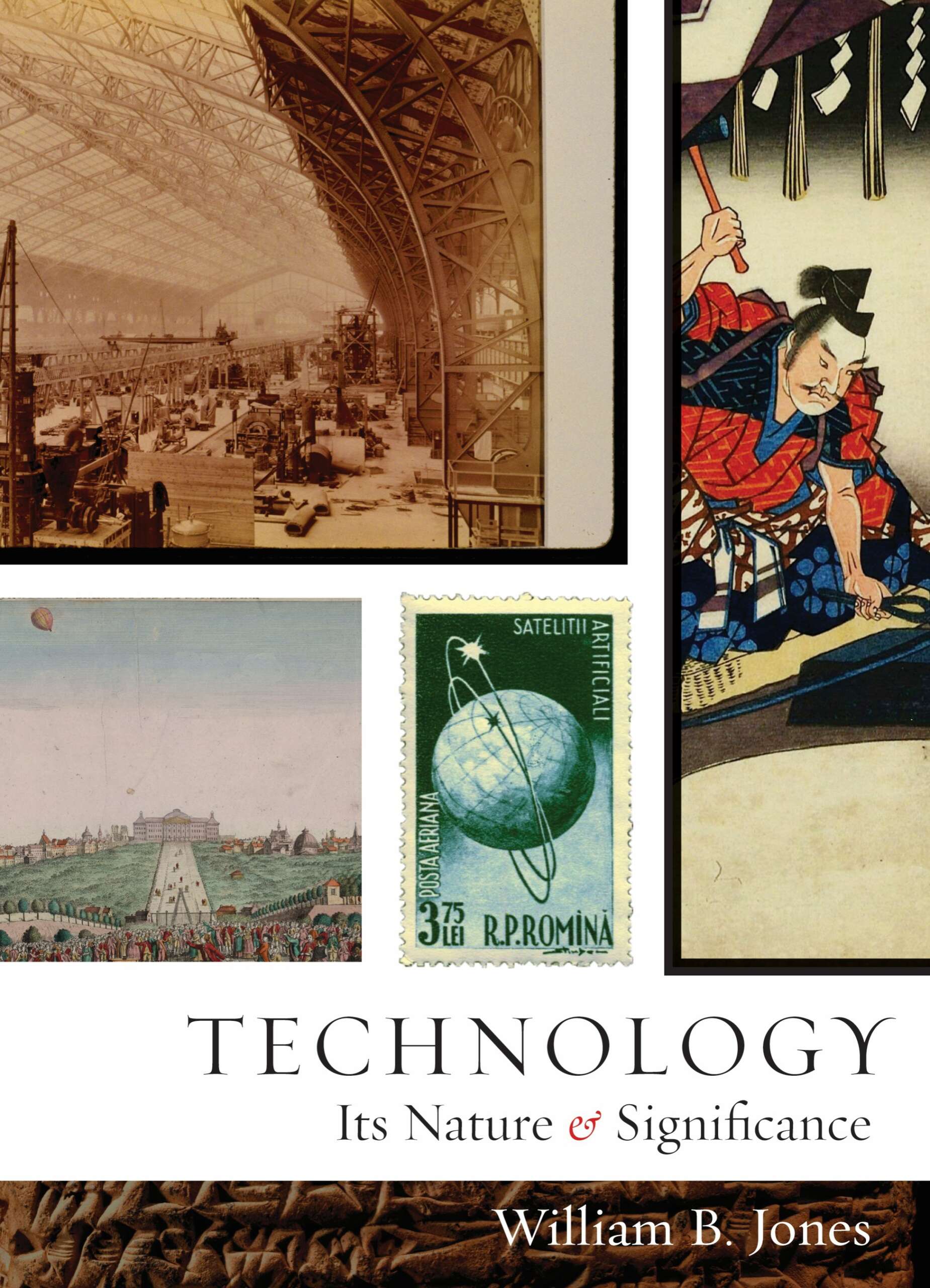
Technology: Its Nature and Significance
  • Publication Date: September 15, 2026
  • ISBN: 9781554810833 / 1554810833
  • 350 pages; 6" x 9"

Price for your region

Note on pricing.

Request Exam Copy

Examination copy policy

Availability: Worldwide

Technology: Its Nature and Significance

  • Publication Date: September 15, 2026
  • ISBN: 9781554810833 / 1554810833
  • 350 pages; 6" x 9"

This book offers a unique approach to studying the history of technology that focuses not only on how technology has shaped and continues to impact the world but also on deepening philosophical understanding of what technology is. Early in the book, Jones provides a novel five-part definition of technology that informs the subsequent chapters. Then, using carefully chosen and instructive cases, Jones traces the origins of technology through its development by humans, demonstrating how key steps in crafting and using tools and the advent of agriculture, written counting systems and language shaped the course of human history. Jones also explores important relationships between technology and other central spheres of the modern human world: science, economics, society and politics, and the environment. Examples range from pre-recorded history to the digital age, and numerous illustrations and photographs throughout the text bring these cases to life for readers. With its conversational tone, insightful asides, and pleasing style, Technology: Its Nature and Significance guides readers through an engaging exploration of the exciting and complex history of technology.

Comments

Technology: Its Nature and Significance is indeed a book for everyone, thanks not only to its clarity and readability but also to its timely subject matter. Blending careful definition with well-chosen illustrations from the co-evolution of nature and the machine world, it slows down the typical rush to judgment about all things technological. If history is philosophy with examples, then this is a quiet tour de force of both philosophical reasoning and historical narrative. Jones speaks to major themes, issues, and questions addressing the complexity of technology, as well the differences that distinguish it from science, providing a powerful demonstration that philosophy and language matter.” — Michael Budd, Professor of History, Salve Regina University

PART ONE: INTRODUCING TECHNOLOGY

CHAPTER I: INTRODUCTION

CHAPTER II: DEFINING “TECHNOLOGY”

  • A. The Nature of the Question
  • B. New and Modified Categories and Classifications
  • C. Basic Aspects of Technology
  • D. Complicating Factors
  • E. Science and Technology
    • 1. A Porous and Diffuse Boundary
    • 2. The Technology of Science
    • 3. Case Study: The Instrumental Revolution in Chemistry

PART TWO: TECHNOLOGY AND HUMAN DEVELOPMENT

CHAPTER III: TECHNOLOGY AND HUMAN BEGINNINGS

  • A. More Advanced Tools and Their Maker
  • B. Yet More Sophisticated Techniques and Survival Strategies
  • C. Technology and Human Beings—At Last!
  • D. Sewing, Spinning, and Fishing
  • E. Aesthetic Expression, Symbolic Representation, and Bodily Ornamentation
  • F. Cultural and Geographical Variation

CHAPTER IV: WOODCRAFT, WORKSHOPS, AND WOVEN WONDERS: TECHNOLOGY AND THE SETTLED WAY OF LIFE

  • A. Gathering Nature’s Bounty: Survival and Status in the Pacific Northwest
  • B. Wizardry in Woodcraft
  • C. Woven Wonders

CHAPTER V: AGRICULTURE, POPULATION GROWTH, AND LIQUISTIC IMPERIALISM

  • A. Basic Features of Transitions to Agriculture
  • B. First Case Study: The Fertile Crescent
  • C. Additional Basic Features: Women’s Roles, Larger Families, and Expanding Populations
  • D. Second Case Study: The Bantu Expansion
  • E. Retrospect and Prospect

CHAPTER VI: RECORD KEEPING, COUNTING, WRITING, AND THE LITERACY REVOLUTION

  • A. Early Record-Keeping in Ancient Sumer
  • B. Proto-Cuneiform and the Sounds of Human Speech
  • C. Early Number Systems and Cuneiform Symbols
  • D. From Record Keeping to Writing
  • E. The Literacy Revolution

PART THREE: TECHNOLOGY AND THE MODERN WORLD

CHAPTER VII: TECHNOLOGY, ECONOMICS, AND SCIENCE

  • A. From Motive Power to Energy
    • 1. Water Power
    • 2. Water Power and Iron
    • 3. Coal and Steam Power
    • 4. Technology and Science
    • 5. Forms of Energy
    • 6. Dividends of the Powerful Partnership: Illumination, Communication and Power Production
  • B. Economics and the Technology of Science
    • 1. The Quadrupole Gas Chromatograph/Mass Spectrometer
    • 2. Laser Cooling and Trapping and the Bose-Einstein Condensate

CHAPTER VIII: THE INTERPLAY BETWEEN SOCIAL AND POLITICAL FACTORS AND TECHNOLOGY

  • A. Technology and Society: Perspectives and Approaches
  • B. Case Study: Gunpowder, Pyrotechnics, and Samurai Swords
    • 1. The Chinese and Gunpowder
    • 2. The Impact of Gunpowder in the West
    • 3. Confrontation of the Elite Swordsman with the Gun in Premodern Japan
    • 4. Later Developments in the West
  • C. The Impact of Industrialization on Women and the Family
  • D. Further Arguments and Issues
    • 1. Technological Determinism, Social Contexts, and Later Developments in Japan
    • 2. Invention, New Uses, and Intellectual Property

CHAPTER IX: ENVIRONMENTAL CONSEQUENCES OF HUMAN INVENTIVENESS

  • A. North American Mega-fauna Extinctions in the Late Pleistocene
  • B. Case Study: The Vanished Thundering Herd
  • C. Corrective Action Prompted by Over-Exploitation of Natural Resources
  • D. The Promise and Perils of the Science-and-Technology Partnership: Genie Out of the Bottle

PART FOUR: TRANSITION TO THE DIGITAL AGE

CHAPTER X: FROM SHEET MUSIC TO STREAMING: A PERSPECTIVE ON THE EMERGENCE OF THE ELETRONIC AND DIGITAL AGE

  • A. Recording Sound
  • B. Amplifying and Broadcasting Sound
  • C. Case Study: The Electric Guitar and Rock Music
  • D. Magnetic Tape and Sound Engineers
  • E. From Transistors and Integrated Circuits to Microcomputers
  • F. The Digitization of Sound
  • G. Satellite, Optical-Fiber Cables, and Cellular Networks
  • H. Impact on the Music Industry, Listeners, and Producers

POSTSCRIPT: THE DIGITAL AGE AND THE FUTURE OF TECHNOLOGY

William B. Jones is Associate Professor Emeritus of Philosophy and Religious Studies at Old Dominion University.

  • • Unique approach to the history of technology that blends historical case studies and philosophical reasoning.
  • • More than 20 illustrations and diagrams help readers visualize historical technologies and their contexts.
  • • Offers an original, complex definition of technology that anchors the discussion throughout the text.
  • • Covers the earliest beginnings of technology through more modern technological developments.
  • • Numerous case studies provide ample opportunities for deep engagement with the history of technology.
  • • Emphasizes and clearly demonstrates the historical and ongoing impacts of technology on science, society, the economy, and the environment, as well as how those aspects of our world shape technology in return.