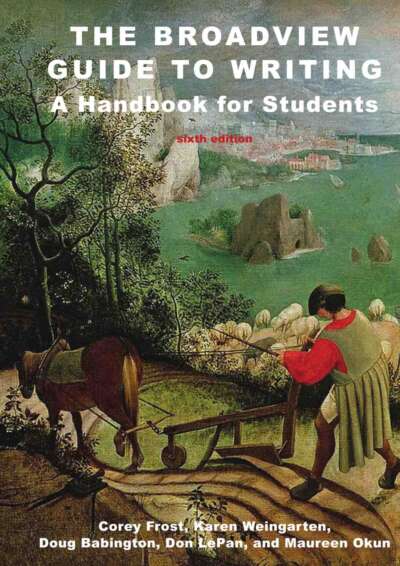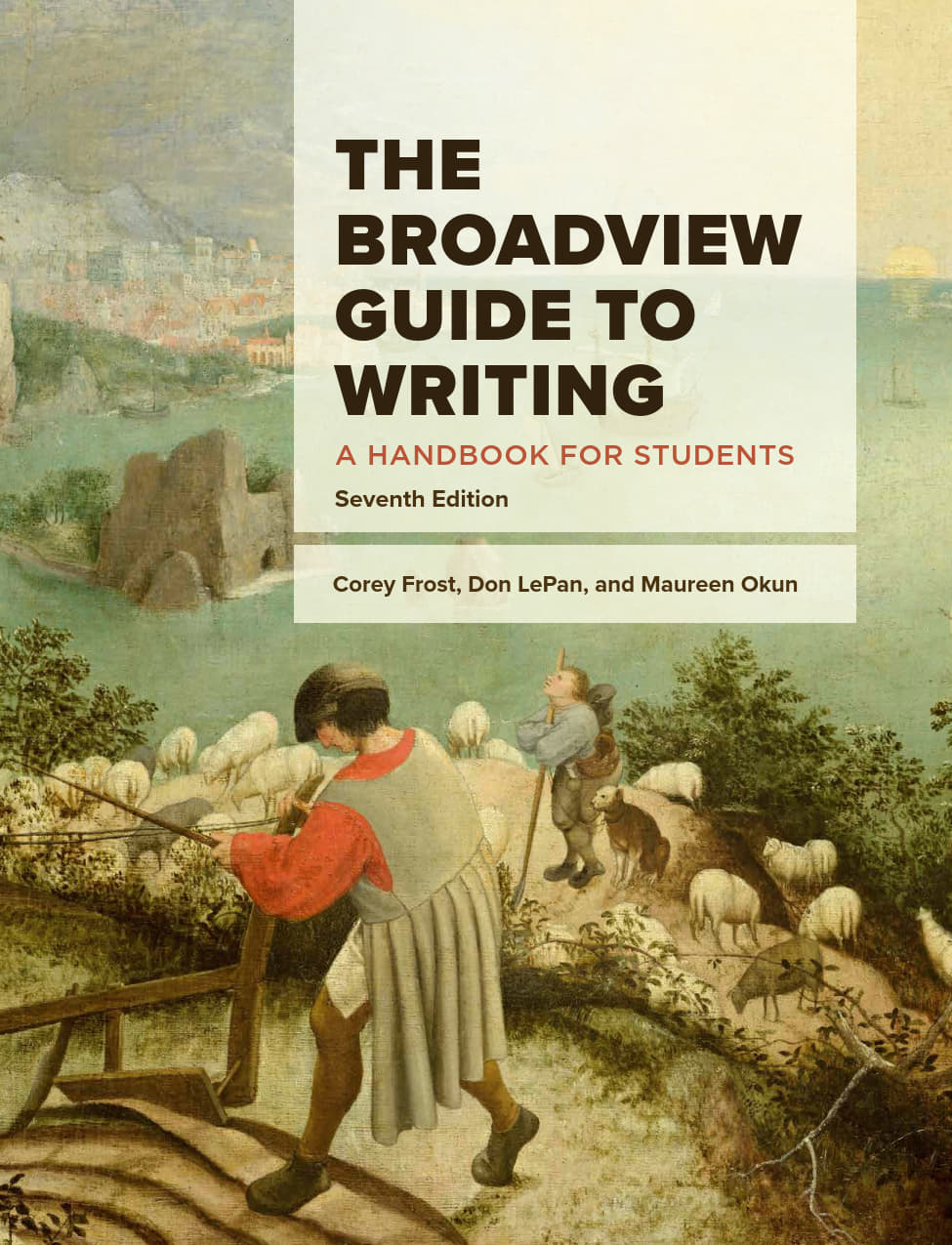
Distinguished by its combination of intellectual seriousness and genuine readability, The Broadview Guide to Writing is a practical and uniquely engaging introduction to essay writing in the 2020s, and a comprehensive handbook covering all aspects of academic writing.
The seventh edition of The Broadview Guide to Writing has been extensively revised to address the changing realities of reading, writing, and research in contemporary academic life. Significantly, while many handbooks function chiefly as reference works, The Broadview Guide combines comprehensive coverage of writing processes, mechanics, and disciplinary conventions with a sensibility that encourages students not only to consult the book but also to read it.
The new edition offers expanded coverage of research practices, source evaluation, revision, feedback, and in-class writing. Four Special Topics sections—two of them new—address reading strategies, reading and writing with AI, interpreting images, and writing sensitively about topics that are often contentious. The book’s Writing Contexts unit has been substantially reorganized, with new overarching sections on informal and personal writing, writing in the arts and humanities, and writing in the sciences and social sciences. Throughout, the seventh edition has been updated to reflect changes in pedagogy, in citation and referencing conventions, and in the conventions of English usage.
Comments
COMMENTS ON PREVIOUS EDITIONS
“Even the most useful reference guides are not always, well, shall we say, riveting. A refreshing exception is the … Broadview Guide to Writing, which is smart, helpful, and even fun to read.” — Gerald Graff and Cathy Birkenstein, authors of They Say / I Say.
“The Broadview Guide to Writing is not only informative and impressive; it is smart—smartly written and smartly designed.” — Dennis Paoli, Co-coordinator, Writing Across the Curriculum, Hunter College, CUNY
“The Broadview Guide remains the most readable writing guide available—at any price. Moreover, it’s sensible, and it’s complete. The authors assume nothing, but they don’t condescend.” — Jacky Bolding, University of the Fraser Valley