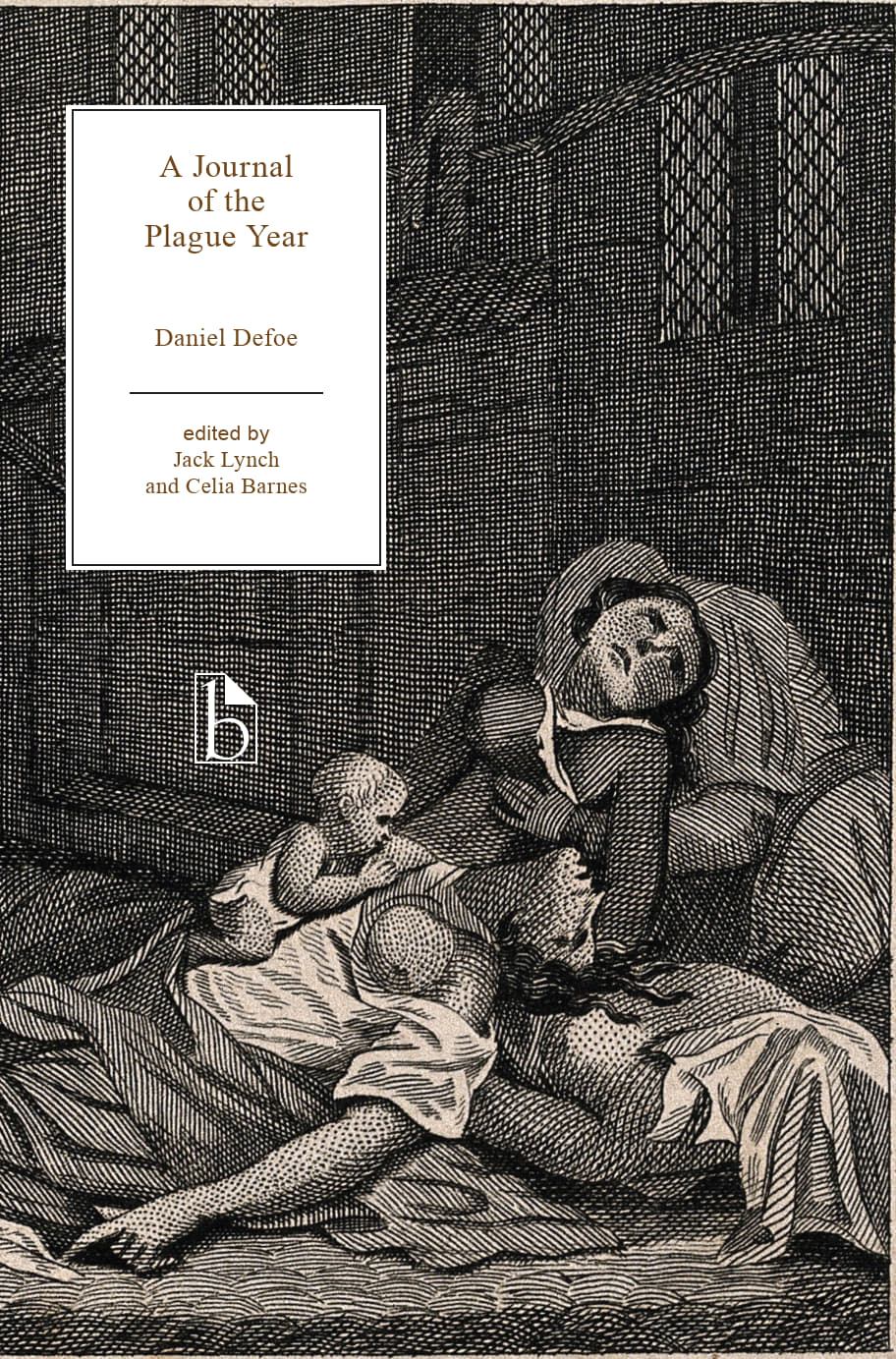
Daniel Defoe’s Journal of the Plague Year is the most vivid first-person account of a pandemic in the English language. The narrative professes to be the daily musings of one “H.F.,” a saddler “who continued all the while in London” during the Great Plague of 1665, England’s deadliest bubonic plague outbreak in centuries. Defoe wrote and published it a generation later, in 1722, three years after Robinson Crusoe and the same year as Moll Flanders. But while A Journal of the Plague Year shares a devotion to verisimilitude with other works of fiction of the day—many contemporary fictions purported to be “histories” or “true stories”—its approach to character is distinctive, as H.F. often recedes into the background. The novel’s depiction of a diseased city and of the social and religious dimensions of a pandemic seem to anticipate our own age. This edition allows readers to appreciate the novel’s complexity and apparent contradictions.
The introduction and historical appendices (which include materials on plagues and the spiritual, civic, and scientific responses to seventeenth- and eighteenth-century pandemics) make Defoe’s book and its world accessible to modern readers. Three new maps show England, London, and H.F.’s neighborhood in 1665.
Comments
“This classroom edition of Daniel Defoe’s A Journal of the Plague Year is not only accessibly introduced, skillfully annotated, and beautifully reconstructed. It’s also joined with further readings designed to bring a classic text about a seventeenth-century urban pandemic into clearer view. Editors Jack Lynch and Celia Barnes have crafted an exemplary, teachable version of this fascinating account that resonates in our own day.” — Devoney Looser, Arizona State University
“Lynch and Barnes introduce Journal of the Plague Year to a new generation, one experienced, like the protagonist H.F., in the peculiar solitude and collective fears of plague times. This reader-friendly edition, with its generous introduction, carefully chosen plague treatises, thoughtful notes, and helpful maps of London, welcomes students to Defoe’s strange world, even as it reminds us why scientific knowledge still matters.” — Lucinda Cole, University of Illinois Urbana-Champaign
“A Journal of the Plague Year is one of Defoe’s most timely works, and this outstanding edition enables modern readers to understand both the historical significance and the contemporary relevance of the text. Barnes and Lynch have assembled wonderful primary sources that situate Defoe’s narrative in the context of seventeenth- and early eighteenth-century religious, medical, and legal discourses and that speak to ongoing anxieties about the causes and consequences of pandemics. With an invaluable introduction, helpful notes, and carefully assembled appendices, this edition will be immensely useful for students and instructors alike.” — Melissa J. Ganz, Marquette University