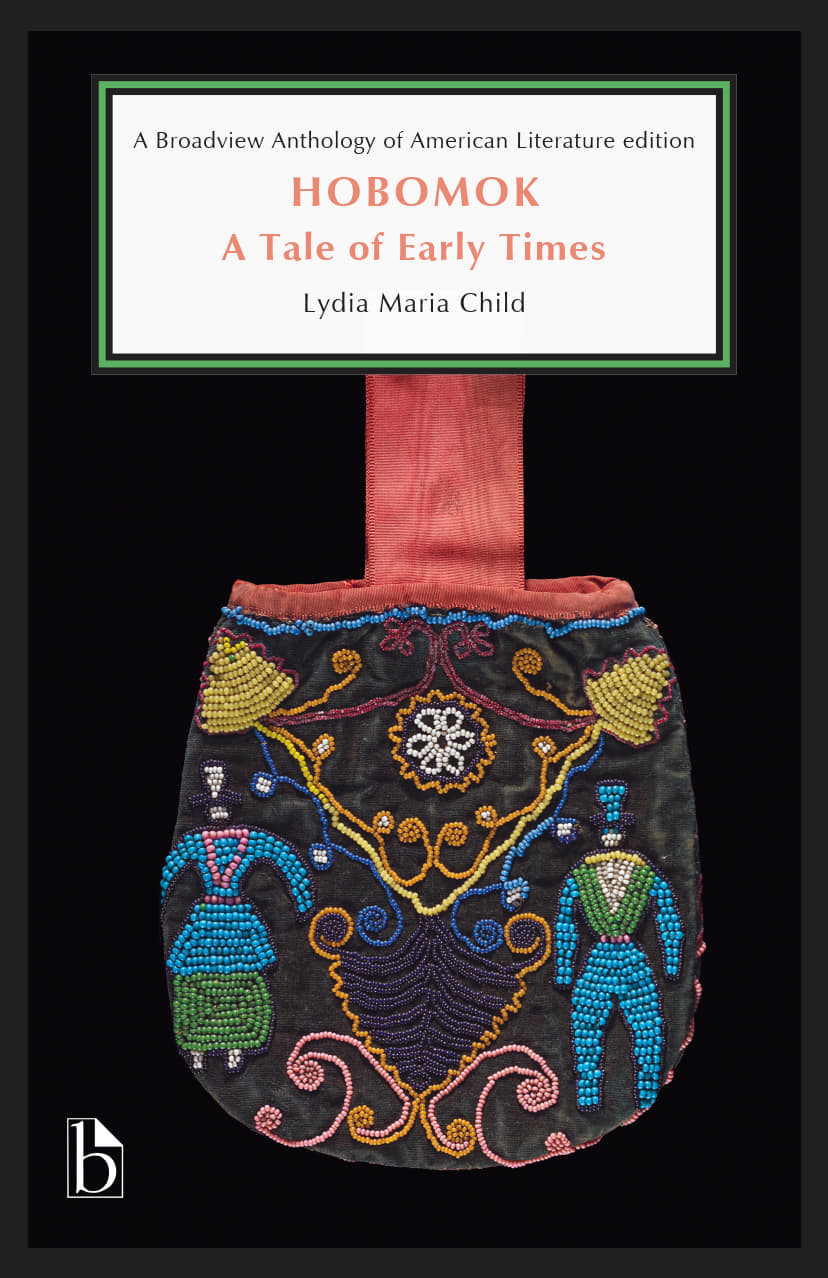
Hobomok, a Tale of Early Times launched the career of one of nineteenth-century America’s most influential writers and activists. Set during the first years of Puritan settlement, Lydia Maria Child’s debut novel centers the experiences of women under the strain of transatlantic migration, dramatizes the religious disputes that roiled the early colonies, and mythologizes settler-Indigenous relations—especially with its depiction of a marriage between its Wampanoag title character and the fictional English colonist Mary Conant, a plotline that astonished readers in 1824. Today, Hobomok commands interest both as a crucial contribution to the project of national mythmaking in early nineteenth-century American literature, and as the first work by a major but still often underappreciated nineteenth-century woman writer. This first new edition of Hobomok in nearly four decades includes an annotated text, a robust introduction to Child and her novel, and a rich array of contextual materials.
Comments
“Hobomok is a fascinating read, both visionary and problematic in its depiction of the explosive effects of European settlement on Indigenous peoples of North America. Tiffany Potter’s new edition provides reviews, maps, historical documents, and—crucially—Indigenous perspectives that enable readers to appreciate the novel’s significance and moral complexity. It confirms Child as one of the foremost intellectuals of her generation, seen here at the beginning of her lifetime of political engagement. A wonderful resource for a captivating book.” — Lydia L. Moland, Colby College
“Nearly 40 years after Carolyn Karcher’s groundbreaking recovery of Hobomok, this new scholarly edition of Child’s fascinating and important novel is very long overdue. Editor Tiffany Potter strikes just the right balance in providing in-depth scholarly explanations of the relevant historical contexts but in a concise, streamlined form that will be of great use to students in the classroom, and to scholars and general readers as well” — James Salazar, Temple University
“Tiffany Potter’s edition [of Hobomok] renders this still under-studied and complex novel more thoroughly comprehensible and accessible. Potter’s clear introductory framing offers a frank discussion of Child’s literary and activist career, acknowledging both her radicality for her time and her severe shortcomings as a would-be ally to Indigenous people. … This edition of Hobomok will serve new and familiar readers of Child’s novel for years to come” — Brigitte Fielder, University of Wisconsin-Madison