Version 2.0 of our free booklet for educators on the topic of AI and Higher Education is also available.
A clear, thoughtful, and practical guide to writing in the age of generative AI.
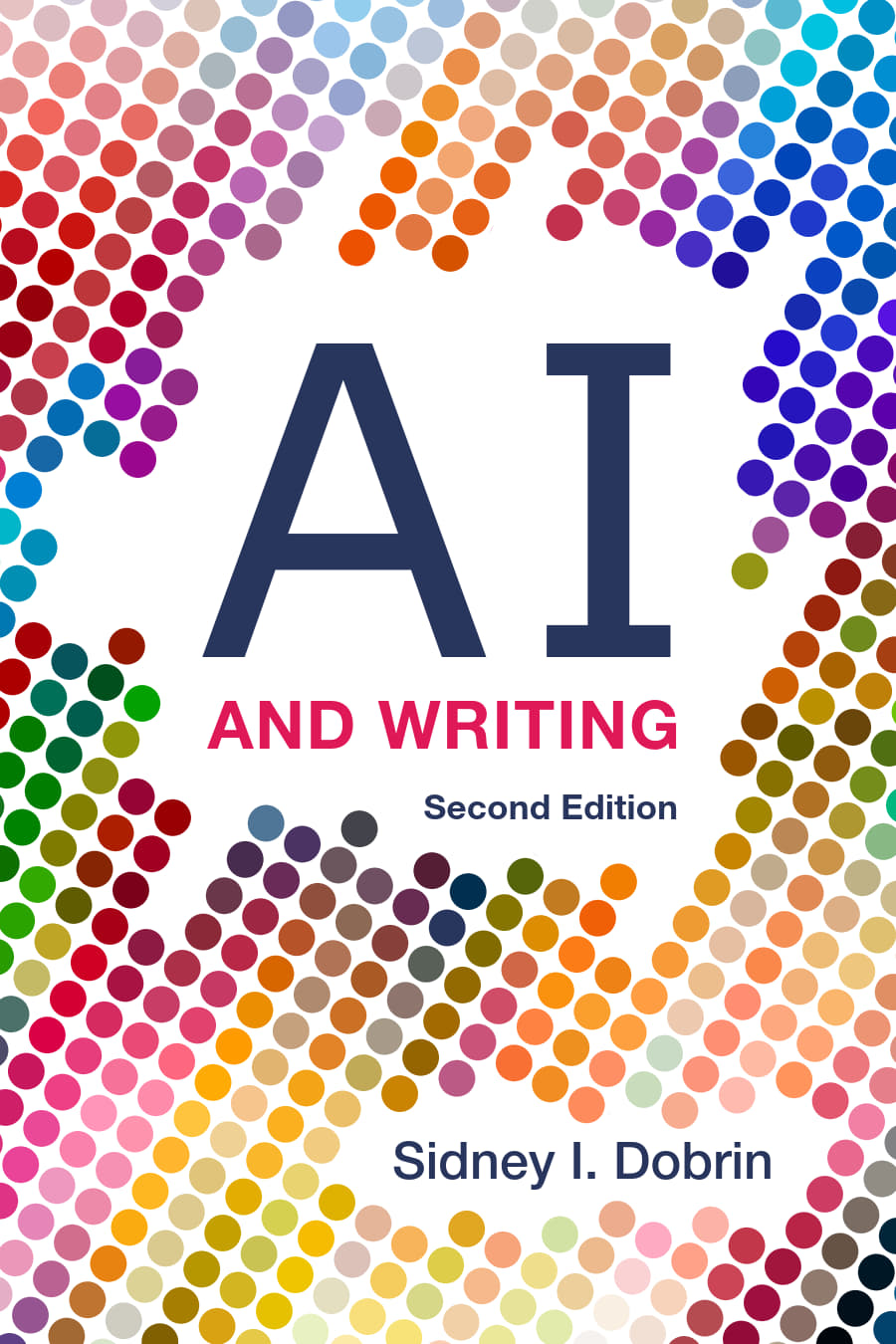
AI and Writing is an indispensable guide to composing with generative AI. Sidney I. Dobrin prepares students to use GenAI effectively, ethically, and critically—skills now essential for academic and professional success. The book tackles core questions: What tasks do these tools best support? Where do they fall short? How are they used responsibly?
Dobrin focuses on durable, transferable writing practices, as well as the real-world issues raised by AI, including authorship, plagiarism, copyright, bias, and the material consequences of AI. “Provocations” boxes spark critical engagement, and each chapter concludes with a sequence of exercises and activities that move students from analysis to hands-on experimentation and reflection.
Comments
“AI and Writing is a much-needed resource for students (and professors!) who are searching for a way to think wisely about GenAI tools, beyond the extremes of dogmatic avoidance and enthusiastic embrace.... Dobrin offers a thoughtful—and sometimes provocative—exploration of how GenAI tools work and the role they might play in academic and professional writing environments, while also frankly considering some of the risks they pose.” — Traynor Hansen, Director of Campus Writing, Seattle Pacific University
“The second edition of AI and Writing provides ... the perfect resource for students of all writing levels, instructors, and (current or future) industry professionals…. The practical classroom activities and discussion prompts are especially helpful for faculty who are working alongside their students to understand GenAI and its integration into writing studies.” — Emily Gillo, University of Memphis
“This timely book helps ease the uncertainty surrounding AI in writing classrooms by offering a balanced approach that bridges theory and practice, academic writing, and everyday technological discussion. Each chapter is reader-friendly and clearly structured around key concepts, discussion questions, and classroom resources. With rich examples and thoughtfully selected topics—from conceptual foundations and ethics to pedagogical practice—this book provides an excellent resource for college English writing courses, supporting informed, critical, and productive engagement with AI in contemporary writing.” — Liping Yang, AI Pedagogy Specialist, First-Year Writing Program, Georgia State University
Comments on the 1st Edition:
“Sid Dobrin has spent his career pushing us to see what comes next for writing, and AI and Writing offers yet another exciting glimpse around the corner....” — Jason Crider, Texas A&M University
“An invaluable read for anyone who wants to better understand GenAI and its impact on education.” — Naomi Mardock Uman, Metropolitan Community College
“... Dobrin deftly captures the enduring questions, illuminates a longer history than some might realize for these technologies, and sets an agenda for thoughtful engagement with AI rather than a reactionary response.” — William Hart-Davidson, Michigan State University