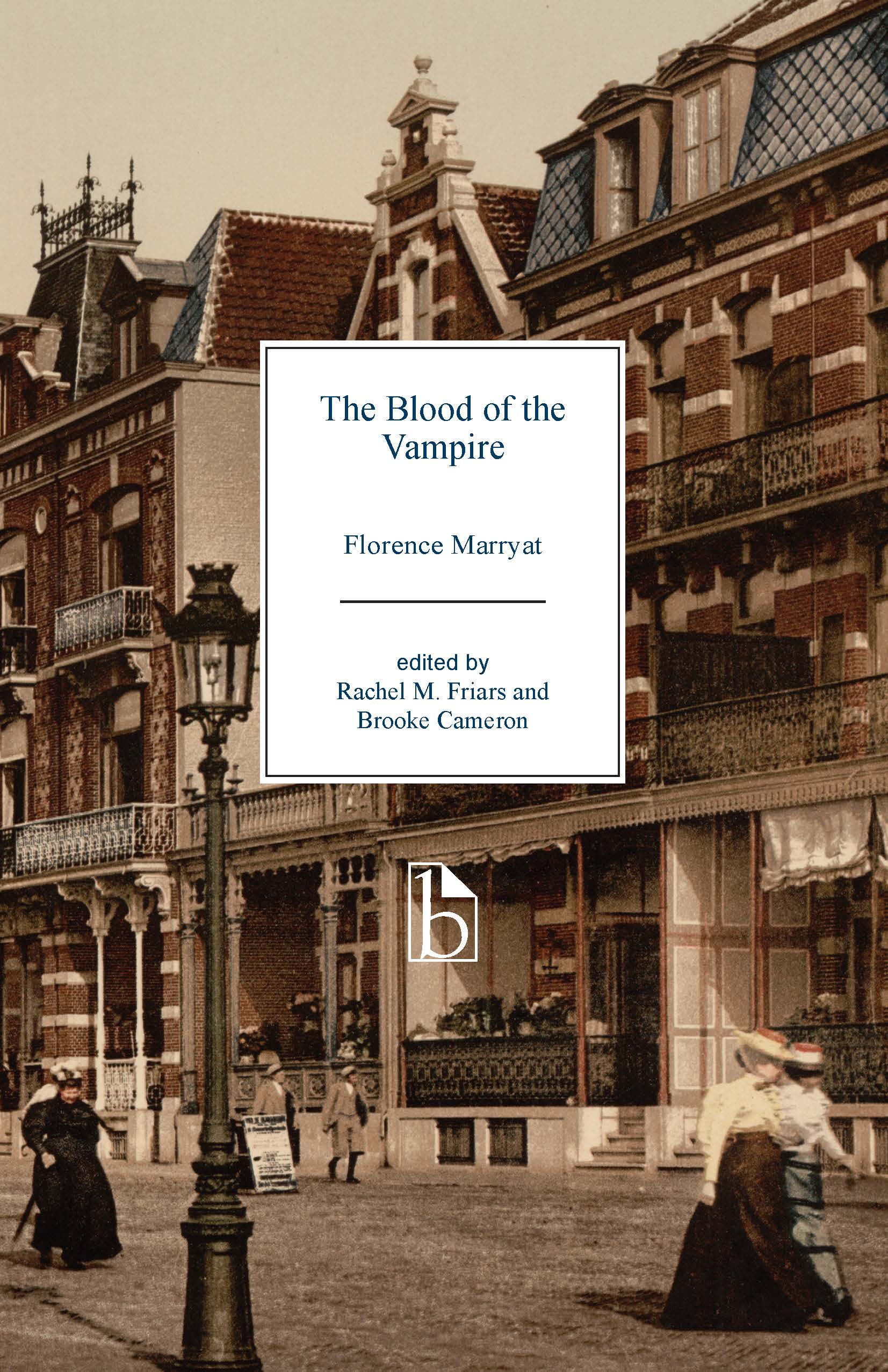
In 1897, the British public’s appetite for gothic speculative fiction showed little sign of waning, and there is perhaps no more famous example of gothic fiction from the period than Bram Stoker’s Dracula. While the novel’s women are by turns monstrous and victimized, Stoker’s text neglects to provide a portrait of a female vampire on par with his infamous Count. Florence Marryat’s The Blood of the Vampire, from the same year, focuses on Harriet Brandt, a mixed-race woman who compulsively drains her victims’ life force rather than their blood. The Blood of the Vampire expands the genre of gothic fiction in the nineteenth century—it is not merely “the other 1897 vampire novel” but a milestone of the genre and a work that ingeniously reflected the Victorians’ own anxieties back to them.
This Broadview Edition includes a critical introduction and a broad range of historical appendices that expand the reader’s understanding of the novel’s historical context; materials on spiritualism, obeah, the “New Woman,” food and fatness, and the novel’s contemporary reception are provided.
Comments
“In this must-have edition, The Blood of the Vampire emerges from the shadows to stake its claim as a foundational vampire novel. The scholarly introduction insightfully explains the novel’s depiction of heritage, sexual contamination, and contagion and its unabashed enthusiasm for spiritualism. The novel’s queer, mixed-race, female vampire is compellingly and sensitively brought to life for twenty-first-century readers.” — Sam George, University of Hertfordshire, Convenor of the Open Graves, Open Minds project
“Rachel M. Friars and Brooke Cameron have given gothic horror scholars a much-needed gift with this brilliant edition of The Blood of the Vampire. They have provided the in-depth footnotes that have been sparse or absent in other editions, as well as primary sources; from reviews to material on obeah, from explorations of degeneration and the New Woman to spiritualism, scholars and students will find the tools they need to meaningfully explore Marryat’s novel.” — Ardel Haefele-Thomas, City College of San Francisco
“This new edition of The Blood of the Vampire is an exciting addition to Broadview’s collection. The novel is an important example of late-Victorian vampire fiction which, from the introduction of its fascinating ‘vampire’ in a Belgian seaside resort to its heart-rending finale, offers readers far more than a simple contrast to Bram Stoker’s Dracula (published in the same year). Friars and Cameron’s introduction and wide-ranging and informative appendices provide a wealth of material to help readers understand the many contexts of the novel.” — Helena Ifill, University of Aberdeen