
Roxana
Almost three hundred years after its first publication, Roxana continues to challenge readers, who, though compelled by Roxana’s story, are often baffled by her complex relationships to her children, her fortune, and her vices. As one of Daniel Defoe’s four major fictions, Roxana has long been understood as central to the history of the novel,…
Colonel Jack
Long dismissed by critics as a novel of merely historical interest, Colonel Jack is one of Daniel Defoe’s most entertaining, revealing, and complex works. It is the supposed autobiography of an English gentleman who begins life as a child of the London streets. He and his brothers are brought up as pickpockets and highwaymen, but…
Journal of the Plague Year
Daniel Defoe’s Journal of the Plague Year is the most vivid first-person account of a pandemic in the English language. The narrative professes to be the daily musings of one “H.F.,” a saddler “who continued all the while in London” during the Great Plague of 1665, England’s deadliest bubonic plague outbreak in centuries. Defoe wrote…
Captain Singleton
Following the success of Robinson Crusoe, Daniel Defoe wrote a new fiction, the story of an English pirate whose success eclipsed every buccaneer the Atlantic world had seen. Featuring a haunted, unreliable narrator, a daring trek across the continent of Africa, and mercantile adventures in the China Seas, Captain Singleton is a tale of loneliness,…
Robinson Crusoe
Robinson Crusoe is one of the most famous literary characters in history, and his story has spawned hundreds of retellings. Inspired by the life of Alexander Selkirk, a sailor who lived for several years on a Pacific island, the novel tells the story of Crusoe’s survival after shipwreck on an island, interaction with the mainland’s…
Restoration and 18th-Century
Paper Bodies: A Margaret Cavendish Reader (1660s) Bell in Campo and The Sociable Companions (1662) Margaret Cavendish Sociable Letters (1664) Margaret Cavendish The Description of a New World, Called the Blazing World (1666) Margaret Cavendish Grounds of Natural Philosophy (1668) Margaret Cavendish The Country Wife (1675) William Wycherley The Rover, second edition (1677) Aphra Behn…
Robinson Crusoe, Modernized Edition
Robinson Crusoe is one of the most famous literary characters in history, and his story has spawned hundreds of retellings. Inspired by the life of Alexander Selkirk, a sailor who lived for several years on a Pacific island, the novel tells the story of Crusoe’s survival after shipwreck on an island, interaction with the mainland’s…
The Farther Adventures of Robinson Crusoe
For more than two hundred years, Robinson Crusoe’s story was encountered by generations of readers as one text in two parts, such that the second novel, The Farther Adventures of Robinson Crusoe, constituted a clear continuation of the protagonist’s eventful life. In the first part of this sequel, Crusoe returns to his island to advise…
Moll Flanders
Born to a petty thief in London’s notorious Newgate prison and determined to make her way in a rapacious and materialistic society, Moll Flanders recounts the “fortunes and misfortunes” of her turbulent life in this 1722 novel. Though Moll Flanders was shaped by the conventions of criminal biography, Defoe also drew on other literary traditions…
The Broadview Editions Bookshelf
The Broadview Editions Bookshelf provides digital access to over 450 meticulously edited works of literature. For more than 30 years, Broadview’s editions have presented classic works of literature, both canonical and lesser-known, in a reader-friendly format with scholarly introductions, footnotes, and appendices to situate each work in its historical and cultural moment. This new digital…
The Broadview British Bookshelf
The Broadview British Bookshelf provides digital access to over 330 meticulously edited works of British Literature. For more than 30 years, Broadview’s editions have presented classic works of literature, both canonical and lesser-known, in a reader-friendly format with scholarly introductions, footnotes, and appendices to situate each work in its historical and cultural moment. This new…
“another claimant for the … discovery of the sources of the White Nile”: Captain Singleton and Geographers Gone Wrong
[Manushag Powell, editor of the Broadview edition of Captain Singleton, shares a piece of history on the imagined African geography of Singleton and the reception of the novel and its cartography the 19th century.] One of the main points of interest in Daniel Defoe’s piratical Captain Singleton (1720) is its extensive description of an east-to-west…
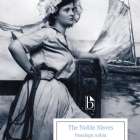
The Noble Slaves
This is the first ever critical edition of Penelope Aubin’s The Noble Slaves, a novel that shows women as both moral exemplars and independent adventurers in foreign lands. Its tales of seduction, imprisonment, and escape engage with contemporary debates about arbitrary authority and slavery—particularly in relation to the lives of women. In one brief and…
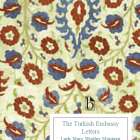
The Turkish Embassy Letters
In 1716, Lady Mary Wortley Montagu’s husband Edward Montagu was appointed British ambassador to the Sublime Porte of the Ottoman Empire. Montagu accompanied her husband to Turkey and wrote an extraordinary series of letters that recorded her experiences as a traveller and her impressions of Ottoman culture and society. This Broadview edition includes a broad…

Waverley
Sir Walter Scott’s first novel, Waverley enjoyed tremendous popularity upon its first publication. The novel is set during the Jacobite Rebellion of 1745, which sought to restore Charles Edward Stuart to the British throne. It portrays the doomed rising from the perspective of the hero, Edward Waverley, who travels to Scotland and is drawn to…
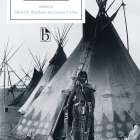
The Female American – Second Edition
When it first appeared in 1767, this novel was called a “sort of second Robinson Crusoe; full of wonders.” Indeed, The Female American is an adventure novel about an English protagonist shipwrecked on a deserted isle, where survival requires both individual ingenuity and careful negotiations with visiting local Indians. But what most distinguishes Winkfield’s novel…
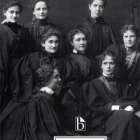
A Serious Proposal to the Ladies
Mary Astell’s A Serious Proposal to the Ladies is one of the most important and neglected works advocating the establishment of women’s academies. Its reception was so controversial that Astell responded with a lengthy sequel, also in this volume. The cause of great notoriety, Astell’s Proposal was imitated by Defoe in his “An Academy for…
The London Jilt
This entertaining novel’s full title, which claims that it will show “All the Artifices and Strategems which the Ladies of Pleasure make use of for the Intreaguing and Decoying of Men,” suggests that it is a cautionary tale. And in fact, The London Jilt is presented as the memoir of a courtesan by an anonymous…
Caleb Williams
William Godwin was one of the most popular novelists of the Romantic era; P.B. Shelley praised him, Byron drew heavily on his narrative style, and Mary Shelley, Godwin’s daughter, dedicated Frankenstein to him. Caleb Williams is the riveting account of a young man whose curiosity leads him to pry into a murder from the past.…
Benito Cereno
“Benito Cereno,” a story of atmospheric Gothic horror and striking political resonance, represents Herman Melville’s most profound and unsettling engagement with the horrors of New World slavery. Narrating the story of a slave revolt using materials drawn from Amasa Delano’s non-fictional account of the Tryal Rebellion from earlier in the nineteenth century, Melville’s story probes…
Barford Abbey
The great-grandmother of Downton Abbey, Barford Abbey is among the first of a new genre of “abbey fictions.” Using the abbey as both a site and a question mark, Susannah Minifie Gunning weaves a story of new and broken relationships, of change and fear of change, and of heredity and inheritance. The abbey becomes not…

The Broadview Anthology of British Literature: One-Volume Compact – Second Edition
Guided by the latest scholarship, The Broadview Anthology of British Literature is acclaimed for its inclusiveness and its deep attention to literature’s historical and cultural contexts. The Broadview is structured to meet the needs of today’s students, with an unparalleled selection of illustrations and contextual materials, accessible and engaging introductions, and full explanatory annotations. The…
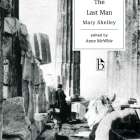
The Last Man
Mary Shelley’s third published novel, The Last Man, is a disillusioned vision of the end of civilization, set in the twenty-first century. The book offers a sweeping account of war, plague, love, and desolation. It is the sort of apocalyptic vision that was widespread at the time, though Shelley’s treatment of the theme goes beyond…
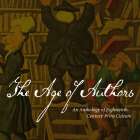
The Age of Authors
Eighteenth-century critics differed about almost everything, but if there was one point on which they almost universally agreed, it was that they were living through an age of extraordinary change. The texts in this collection respond to a series of fundamental questions about the changing nature of the literary field during a tumultuous age: What…